
CAMBODIA · 3S & 4P BASINS
Enhancing Integrated Water Management and Climate Resilience in the 3S and 4P Basins*, Cambodia
Water, livelihoods and a more resilient future.
Explore the story ↓*The 3S River Basin comprises Sekong, Sesan and Srepok River Basins, 4P Basin refers to the catchments of the rivers Prek Preah, Prek Krieng, Prek Kampi, and Prek Te.
IWRM CAMBODIA / 01
Introduction
The Mekong River and its tributaries are waterways critical to the economy and food supply chains of Cambodia. 155,000 km2 of the Mekong basin lies within the country, encompassing an area in which about 90% of Cambodia’s population (~16 million people) lives (MRC Mekong River Basin 2023 State of the Basin Report). Cambodia’s population is predominantly rural but with a strong urbanization trend. The country’s GDP increased by more than tenfold between 2001 and 2023, and its poverty rate declined to 16.6% in 2022 from 36.7% in 2014.
Despite the country’s steady economic growth, around 70% of Cambodians still live on less than $3 per day, making them vulnerable to slipping back into poverty in situations of economic or climate shocks. The low adaptive capacity of a large part of the population is exacerbated by their heavy reliance on climate-sensitive sectors, such as water resources and agriculture. Livelihood activities and economic sectors dependent on these resources are traditionally highly sensitive due to the country’s unique geographic conditions and hydrological system.
In recent years, observed impacts of climate change trends have been marked by:
🌧️ More intense rains over shorter periods of time, leading to floods
⌛ Delayed onset of the rainy season, preventing early cultivation of wet season crops
🌡️ Longer dry seasons and more intense El Niño-related droughts
🔥 Unexpected dry periods during the rainy season
🌾 Untimely rains spoiling ready-to-harvest or drying crops
Recent impacts and projected future trends highlight the increasing vulnerability of Cambodia to climate change, particularly in areas adjacent to waterways including the Mekong River.
IWRM CAMBODIA / 02
UNDP’s role
Against this backdrop, in 2021, United Nations Development Programme (UNDP) received funding from the Ministry of Environment of the Government of Republic of Korea for the four-year project Enhancing Integrated Water Management and Climate Resilience in Vulnerable Urban Areas of the Mekong River Basin.
The objective of the project has been to strengthen the climate and disaster resilience of people and vulnerable communities through improved risk and vulnerability assessment and advancing an integrated approach to water resources management.
The transboundary project focused on selected subbasins of the Mekong River Basin in Cambodia and Lao PDR has been implemented by UNDP Bangkok Regional Hub, UNDP in Cambodia and UNDP in Lao PDR Country Offices. UNDP in Cambodia, in collaboration with its implementation partners People In Need (PIN) and Asia Water Council (AWC), has been responsible for the implementation of project activities in the 3S and 4P Basins of Cambodia (see map below). Intensive and fruitful collaboration was achieved throughout the project with government partners National Committee for Disaster Management (NCDM) and Ministry of Water Resources and Meteorology (MoWRAM), the country’s key decision makers on disaster risk reduction and water resources management.
THE PROJECT AREA
The 3S and 4P Basins
Explore the basins and 2020 land cover. Select a basin to see its name.
Land cover legend
This storymap provides insights into the key achievements of the project tasks implemented by UNDP in Cambodia and partners:
1. Improved understanding of water-related climate risks
2. Strengthened technical and institutional capacity and community disaster preparedness
3. Identification and prioritization of effective Climate Change Adaptation (CCA) and Disaster Risk Reduction (DRR) options
IWRM CAMBODIA / 03
Improved understanding of water-related climate risks
Highlight #1: Comprehensive understanding of climate risks and stakeholder landscape
An extensive field survey was performed to take stock of climate change-induced and water-related risk and vulnerability in the 3S and 4P basins. Inputs from over 400 households and individuals from 19 vulnerable villages in Kratie and Stung Treng Provinces were collected in a field campaign, complemented by focus group discussions and key informant interviews with the main stakeholders at sub-national and national levels. Among others, this provided important information of the perception of the rural population in Kratie and Stung Treng with regards to the main climate-related hazards to their livelihoods. Some of the key results can be explored below:
VOICES FROM THE BASINS
Community perspectives
Explore the household survey results. Values show the percentage of respondents.
Apart from perceptions and experiences related to climate change and associated risks, a comprehensive picture of ongoing efforts and information services was obtained. Critical monitoring, forecasting and early warning information is provided among others by:
• PRISM - Platform for Real Time Impact and Situation Monitoring (PRISM) was developed with support from World Food Programme for NCDM to integrate geospatial data on hazards such as droughts, floods, tropical storms, and earthquakes, along with information on socioeconomic vulnerability, to inform disaster risk reduction and social assistance programmes.
• CamDi - CamDi (Cambodia Disaster Damage & Loss Information System), supported by UNDP and updated by NCDM, documents the effects and damage resulting from natural disasters in Cambodia on: human life, housing, agriculture, infrastructure, schools and hospital/health centers. The project supports NCDM on maintenance and improvement of CamDi, further rollout and dissemination of the system, and training to subnational authorities.
• Early Warning System (EWS) 1294 - a life-saving system that provides accurate and timely flood information to national and provincial authorities, and allows them to easily and quickly disseminate reliable warning messages to at-risk communities regarding climatic or societal hazards.
Highlight #2: Insights into crop-specific climate risks
An innovative integration of spatial climate data, satellite-derived information, government statistics and stakeholder consultations resulted in a crop-specific risk assessment of the production systems of the most important cash crops in the 3S and 4P Basins. Cashew, mango, banana and cassava have value chains of relatively high socio-economic importance and with large cropping areas. For each of these crops, risks associated with floods, drought and heat were evaluated at the district level.
Climate change impacts on crop-specific critical hazards can be viewed through below dashboard. Further details regarding the study’s methods and results can be accessed here.
EXPLORE THE ASSESSMENT
Climate hazards across the districts
Compare the baseline with projected changes. Select a district for its value.
View district values
Climate hazards with the highest impact on agriculture in 3S and 4P Basins are expected to be heat, flash floods, and drought. In terms of relative changes to the current situation, especially heat stress is expected to increase drastically, making up an increasingly important part of the overall climate risk to agriculture in the region. Taking into account crop-specific sensitivity to climate change, climate risks to cultivation of cashew, mango and banana are expected to increase over the next decades. Due to the regional socio-economic importance of these crops, it is crucial that effective adaptation options are identified and implemented in the regional agricultural sector. District-level mapping reveals a degree of spatial variability in the nature and severity of climate risks, and this study can guide the implementation of targeted adaptation measures.
While cashew, mango and banana are all expected to be increasingly at risk, cassava is expected to continue to thrive in the 3S and 4P Basins, particularly due to its relatively high tolerance for hot conditions. Promoting cassava cultivation could therefore play an effective role in climate adaptation strategies.
Highlight #3: Successful development of flood forecasting and impact-based forecasting models
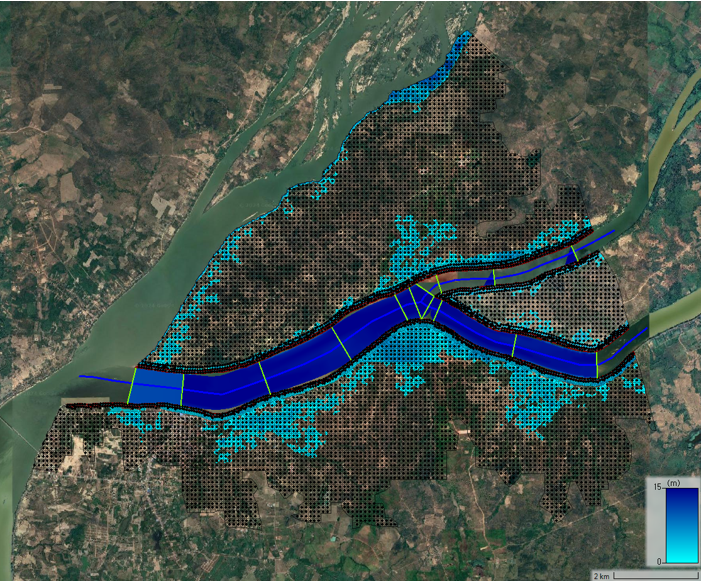
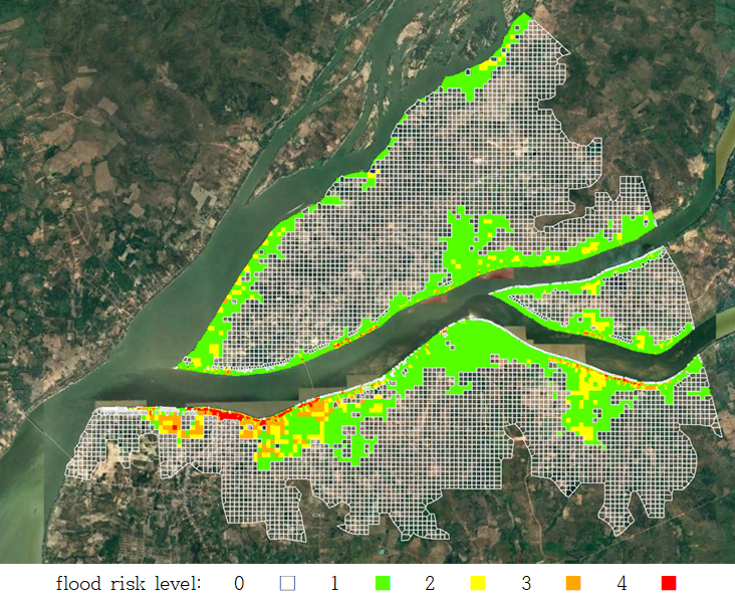
The project identified the lack of early warning information on floods as one of the key factors exacerbating the vulnerability of the population of the 3S and 4P Basins. Such warning messages can be based on spatial flood models which provide forecasts of flood extents, inundation depths, and associated risks. These models are also crucial in supporting planning of green and grey infrastructure to reduce occurrence and impacts of flood events.
To this end, AWC supported the development of flood propagation and Impact-Based Forecasting (IBF) models for Stung Treng and Kratie, the two main urban centers of the 3S and 4P Basins, as well as for the project sites in Lao PDR. Flood occurrence and risks were successfully mapped for particular rainfall events. The developed models are technically suitable for uptake in an operational forecasting / early warning system. Two joint training events were organized with participation from the technical officers from MoWRAM as well as the Ministry of Natural Resources and Environment of Lao PDR (MoNRE). These activities also contributed to a strengthened partnership between UNDP and AWC for joint, long-term action to enhance climate resilience in Cambodia.
IWRM CAMBODIA / 04
Strengthened technical and institutional capacity and community disaster preparedness
Highlight #4: Strengthening capacities from the commune to the national level
At the heart of the project was the goal of building capacity of local communities to manage and mitigate disaster risks. Capacity-building initiatives aimed to equip local disaster management committees and community members with crucial skills, including the use of GIS for mapping risks, developing gender-responsive contingency plans, managing climate risk data, and the introduction of practical tools such as EWS 1294 and community-based risk assessment. A significant change has been the transformation of the way in which communities in the provinces of Kratie and Stung Treng approach disaster preparedness. Before the project, they had limited access to early warning systems and were often unprepared for the rapid onset of disasters, which left them vulnerable to severe impacts. Through the project’s interventions, there has been a marked shift in the communities' behaviour and practices. Local authorities, who were initially the primary recipients of training, began to take proactive steps to engage the broader community, ensuring that disaster preparedness became a shared responsibility. In this way, the project facilitated stronger relationships between local authorities and the communities they serve. Authorities became more attuned to the needs of the community and community members felt more empowered to contribute to disaster preparedness efforts.
The project has not only enhanced community resilience but also influenced national policies on disaster risk reduction and climate resilience. A key focus has been the development and endorsement of the National Action Plan for Disaster Risk Reduction (NAP-DRR) in Cambodia. Prior to the project, disaster risk reduction policies in Cambodia were less inclusive, with limited integration of gender perspectives and insufficient involvement of subnational authorities in policy development. The project facilitated a participatory process that brought together national policymakers, subnational authorities, and representatives from vulnerable groups, including women and indigenous populations. The endorsement of the NAP-DRR with its inclusive and gender-responsive provisions represents a major step forward in Cambodia’s approach to disaster risk reduction. By institutionalizing these inclusive practices, the project has ensured that future disaster risk reduction efforts will be more equitable and effective, addressing the needs of all segments of the population.
Highlight #5: Creating the first platform for transboundary cooperation between (sub-)national government stakeholders
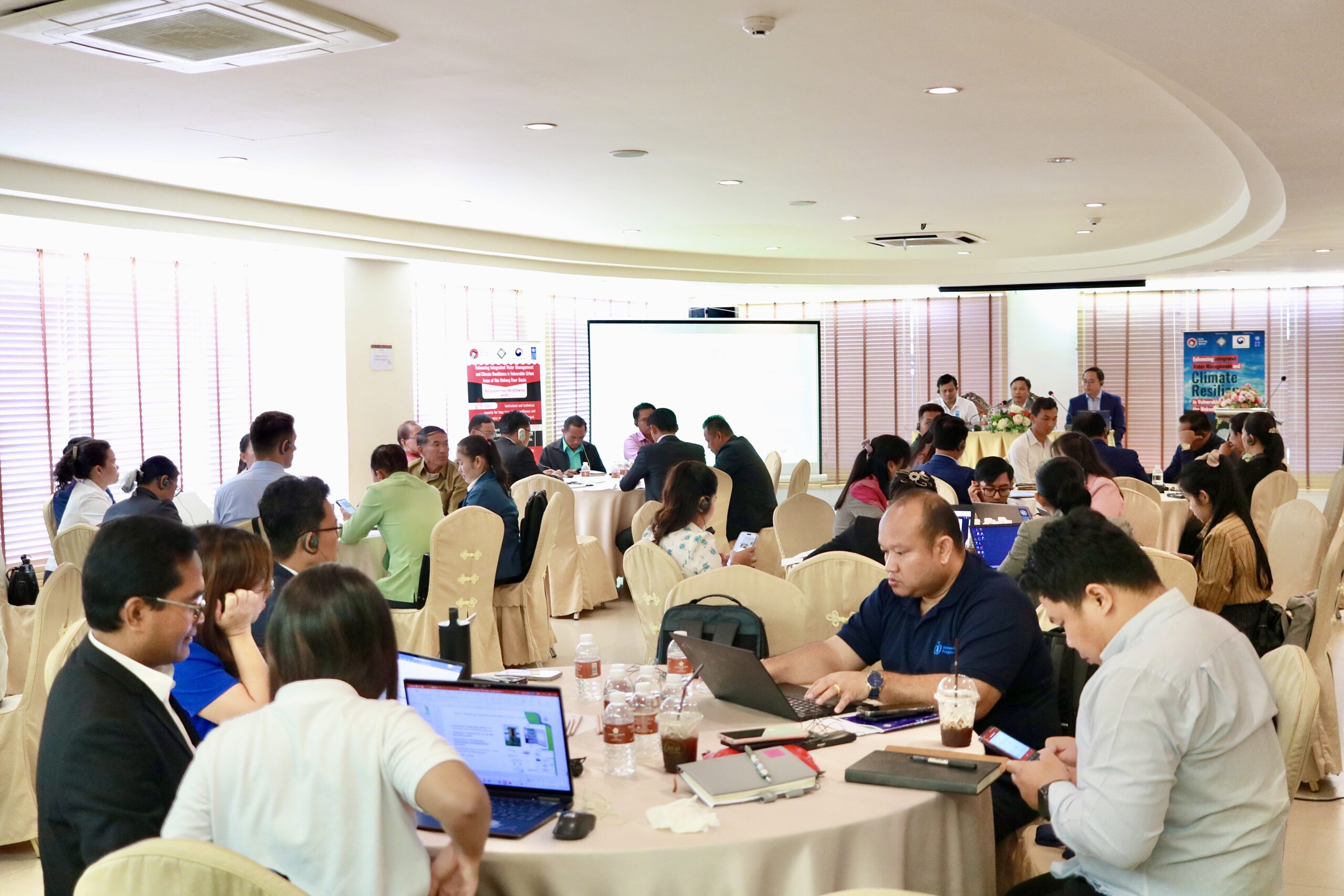
A sequence of four transboundary learning events on DRR and Integrated Water Resources Management (IWRM) was organized in collaboration with the main government stakeholders from both Cambodia and Lao PDR. The objectives of these transboundary events were to facilitate knowledge exchange and cross-border learning, and to work towards a framework for sustaining future communication and collaboration to enable further integration of early warning systems and related policies and practices. A major success of these events has been the joint establishment of Terms of Reference for a transboundary Technical Working Group, which should ensure enhanced future collaboration between Cambodia and Lao PDR on DRR and early warning systems in transboundary catchments. The platform provided by the learning events was indicated by participants to be the only existing mechanism for bilateral knowledge exchange between the two countries.
Highlight #6: Implemented community-level gender responsive DRR and CCA actions
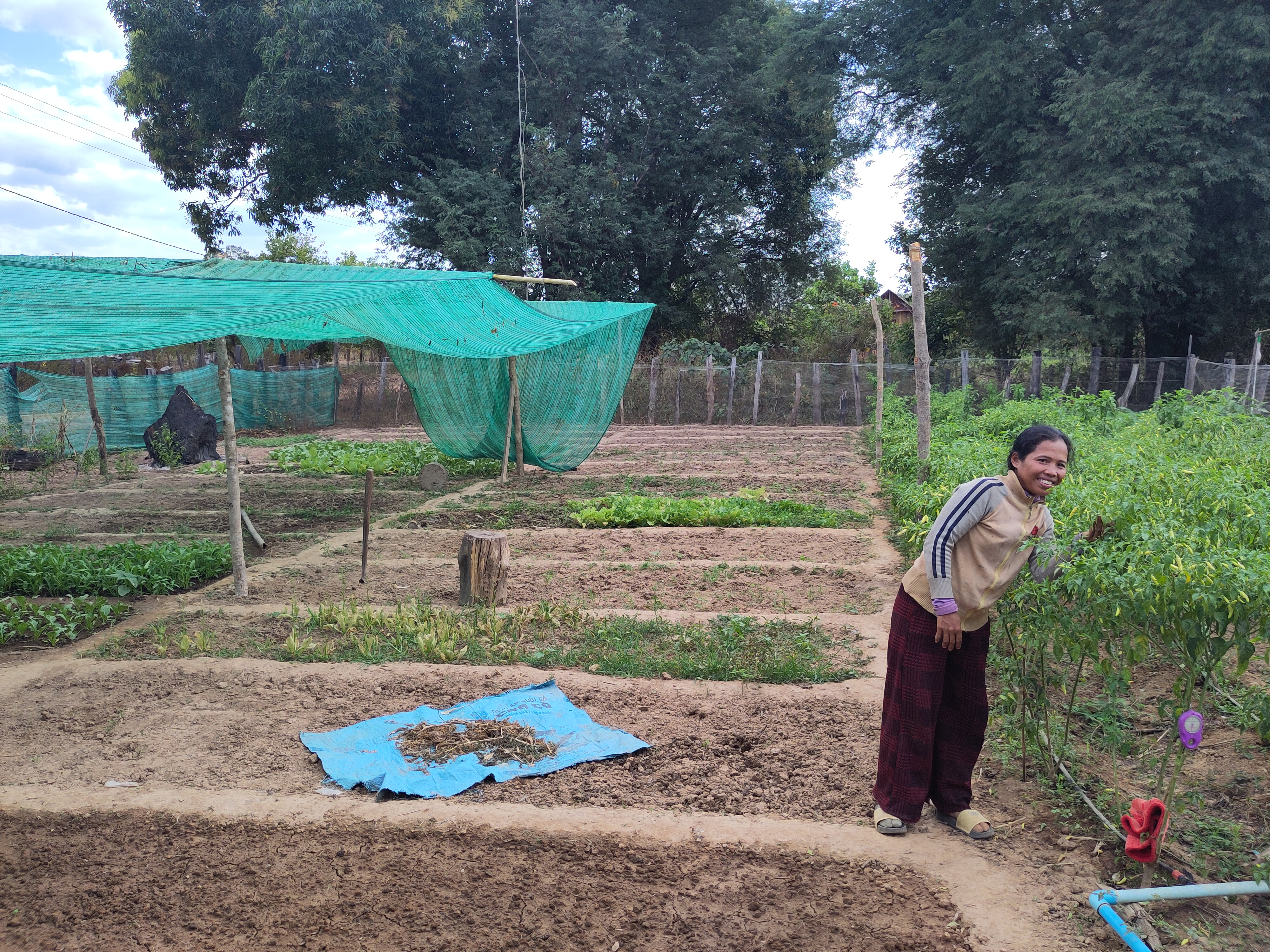
A number of vulnerable target communities were selected for initial, on-the-ground implementation of activities to strengthen their disaster preparedness and overall resilience. Within these communities, NCDM provided several household beneficiaries with access to critical resources such as crop seeds, farm animals, sanitary and hygiene supplies, and building material. These micro projects successfully achieved positive impacts in many different aspects, as illustrated by the personal stories below (link to PDFs):
• Ms. Koul Loy, Santepheap Commune
• Ms. Chan Neang, Bos Leav Commune
IWRM CAMBODIA / 05
Identification and prioritization of effective CCA and DRR options
Highlight #7: Climate change adaptation and disaster risk reduction measures successfully identified and prioritized
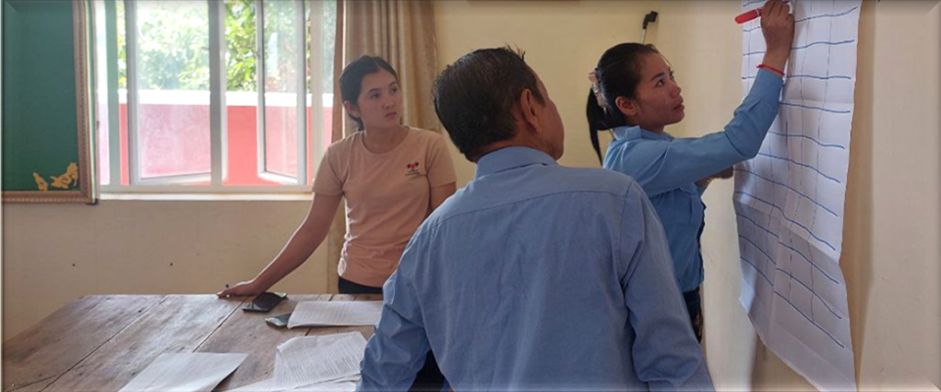
Based on the wealth of knowledge produced under the project related to climate risks and vulnerabilities as well as the capacity and priorities of key stakeholders, CCA and disaster risk reduction DRR actions for Cambodia’s 3S and 4P river basins were identified. Using a participatory approach, focus group discussions and consultations with stakeholders including government agencies, NGOs, local communities, Indigenous Peoples, and women's groups were organized to discuss a longlist of CCA and DRR options derived from the various studies and surveys that were implemented over the past years. A scoring framework based on seven criteria (e.g., effectiveness, feasibility, co-benefits) was used to evaluate and prioritize the CCA/DRR actions across drought, flood, and cross-cutting themes. The results yielded tailored action plans at the province level with measures addressing for example improved irrigation, early warning systems, resilient seed distribution, gender-responsive training, and local economic support initiatives. These action plans should support implementation of targeted CCA and DRR policies and practices, leveraging ongoing projects, and addressing resource and capacity limitations through multi-stakeholder collaboration.
IWRM CAMBODIA / 06
Future outlook
Through a vast range of activities from the commune to the transboundary scale, and by closely engaging with key stakeholders at each level, the project has achieved a major leap forward in strengthening the climate and disaster resilience of the population of the 3S and 4P Basins. Improved assessments of climate risk and vulnerability, strengthened technical and institutional capacity, and promotion and institutionalization of inclusive DRR and IWRM practices were all realized over the past four years. Moreover, the project has laid the foundation for implementation of targeted and effective climate adaptation and DRR options in the coming years. The specific results and recommendations from the project are currently being incorporated into multiple funding proposals to take the next steps toward climate resilient communities in the 3S and 4P Basins.
IWRM CAMBODIA / 07
Reports
The resulting technical report can be downloaded from:
Simons, G.W.H., C. Nolet. 2023. Climate Risk Assessment of Key Agricultural Supply Chains in the 3S and 4P Basins, Cambodia. FutureWater Report 247. ↗️
IWRM CAMBODIA / 08
Contact
Ms. Dalis Lim, UNDP Project Manager- ROK-Mekong
Dr. Gijs Simons – g.simons@futurewater.nl, Chief Technical Advisor- ROK-Mekong